
Meet this year’s impressive scholarship recipients, committed to serving and advocating for the community as licensed social workers.
Laurel House, Inc., and rtor.org, a free service of Laurel House, are proud to announce the winners of the 5th annual Social Work Racial Equity Scholarship. This competitive scholarship aims to improve mental health outcomes in Connecticut by supporting culturally responsive Master of Social Work students who are dedicated to addressing the needs of underserved communities. The initiative focuses on increasing the number of Black and Latino social workers committed to advancing social justice and expanding access to mental health care in communities of color.
Congratulations to both deserving winners! We hope the $10,000 and $5,000 awards help pave the way for your promising futures.
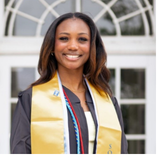
LIBERTY BROWN
Winner of the $10,000
Social Work Racial Equity Scholarship
Undergraduate Degree
Central Connecticut State College
Master of Social Work Program
Quinnipiac University
Read more about Liberty
“Social workers can practice with cultural humility and offer trauma-informed care in a non-Eurocentric approach... Social workers can help clients navigate complex systems and connect them to resources while dismantling structures that create barriers and limit access to care.”
Liberty Brown
Winner of the $10,000 Social Work Racial Equity Scholarship
Ms. Brown, a graduate of Central Connecticut State University, is currently pursuing a Master of Social Work at Quinnipiac University with an interest in addressing housing instability and co-occurring mental health and substance use disorders. She exhibits academic excellence while volunteering at a homeless shelter and working as a residential counselor at a behavioral health and addiction recovery center.
Her commitment to advocating for systemic change in mental health access and care for marginalized communities comes from empathy and personal understanding. Shaped by her own difficult challenges with financial and housing instability — all while juggling school and many hours of employment — Liberty aspires to ease the path to mental health treatment by reducing stigma, offering culturally responsive approaches, and ensuring basic needs are met.
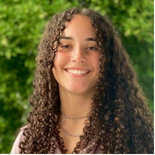
ISABELLA “IZZY” COLUCCI
Winner of the $5,000
Social Work Racial Equity Scholarship
Undergraduate Degree
Boston University
Master of Social Work Program
University of Connecticut, Stamford
Read more about Izzy
"Social workers have a superpower. How? Too often, pathways to accessing information about resources that would aid BIPOC and neglected communities are behind confusing language, the need for internet access, and service fees to hear about the resources. With our superpower, we can take further steps outside of our job description to share and translate these programs and resources to our clients and communities without all the hoops and ladders. I believe in this superpower, and you should too."
Isabella “Izzy” Colucci
Winner of the $5,000 Social Work Racial Equity Scholarship
Isabella “Izzy” Colucci grew up in Fairfield County, Connecticut, and completed her bachelor’s degree in psychology at Boston University.
Her life goal, helping those in need through psychiatric support, resource education, and equity advocacy, was shaped by a social worker when she was in elementary school. The social worker demonstrated genuine compassion, took action and connected her single mother, a Colombian immigrant, with free school lunches and other critical programs to support her family's basic needs. This is the model by which Izzy operates — taking the extra steps and treating everyone as deserving of quality care.
Now in the second year of her Master of Social Work program at the University of Connecticut, Stamford, Ms. Colucci is focused on the complexities of treating eating disorders and co-occurring mental health disorders. She works at Center for Discovery as an Eating Disorder Technician.
Please join us in congratulating the winners of this year’s Social Work Racial Equity Scholarship. We commend you for your present and future contributions to the field of social work and the communities you serve!
The Need for More Black and Latino Mental Health Care Professionals
Black, Latino, Asian, and Native American individuals experience higher rates of certain mental health disorders and face significantly greater barriers to care compared to the national average (American Psychological Association). These disparities are primarily driven by limited access to services, economic barriers, and a shortage of culturally responsive providers.
With appropriate treatment, 70–90% of people living with mental health conditions see substantial symptom relief and improvements in quality of life. Yet too often, people delay or avoid seeking help due to high costs, stigma, and a lack of accessible, culturally responsive care.
Black and Hispanic communities are especially affected by these systemic gaps. Increasing the number of clinical social workers from these communities is essential. Representation matters. Adding more clinical social workers who understand cultural contexts and lived experiences of those they serve fosters trust, reduces stigma, and opens doors to care that is accessible, effective, and affirming.
Learn More
