
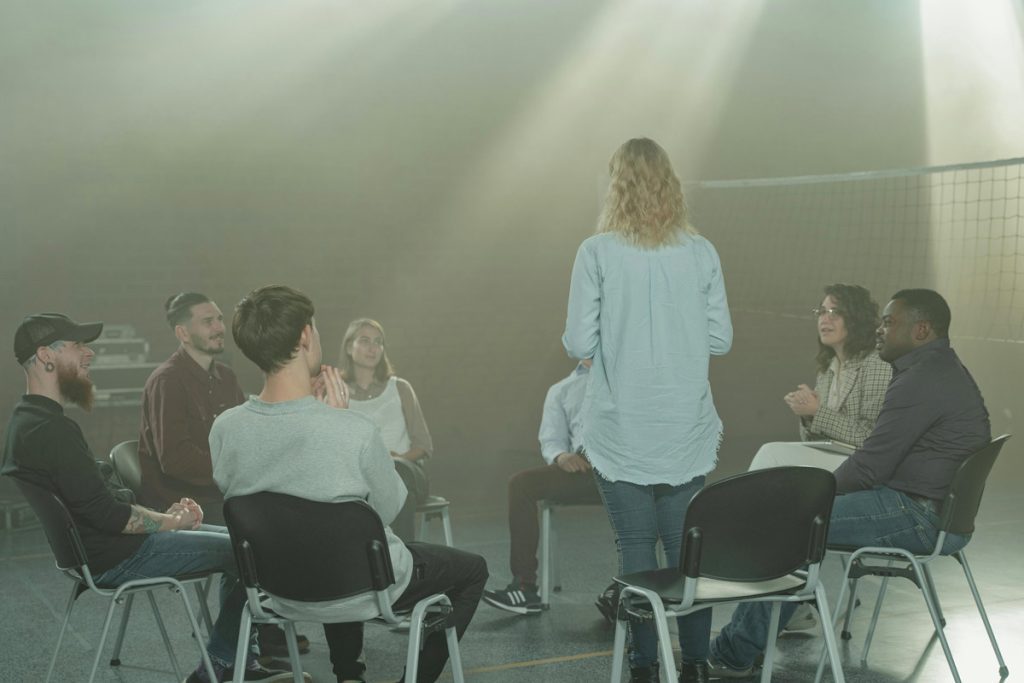
Mental well-being is usually not something that people can achieve by accident. Life’s inevitable challenges — loss, stress, transition, and hardship — can take a real toll, and having the right people around you makes all the difference. That’s why many people are turning to intentional relationships: a deliberate approach to building community that can meaningfully support mental health.
Building community helps ensure you have help when you need it and reduces some of the stress of navigating life’s difficult moments. With this guide, you’ll understand how intentional relationships can help you build a community that truly supports your mental health.
Understanding Intentional Relationships
As social beings, humans naturally seek community. The trick lies in finding a community that truely feels supportive of you. Most people have family members, friends, coworkers, neighbors, and other associates. Many of these relationships are unintentional, meaning that you did not go out of your way to form them. Others are formed through shared activities or interests such as sports leagues, volunteer programs, book clubs, or faith-based or spiritual groups.
By comparison, intentional relationships require curation and regular nurturing. These are the relationships you keep because they mean something to you, not just proximity or blood relation. Intentional relationships go deeper than shared interests or proximity. In values-based or spiritual communities, these relationships are often built on shared beliefs, a sense of purpose, or personal growth, which can strengthen connections.
Recovery-based communities, such as 12-Step Programs, offer another powerful example — bringing together people with shared experiences of addiction or mental health challenges to provide mutual support, accountability, and hope. When the bond runs that deep, belonging is not something you have to earn. It holds even through conflict, distance, and hard seasons.
Types of Community Support for Mental Health
While therapy and psychiatric services are essential, mental health care doesn’t end there — community support plays a vital role that often goes overlooked. Common types of community support include:
- Social support from your personal network
- Peer support
- Mentorship
- Workshops
- Educational programs
- Faith-based spiritual communities
- 12-Step Programs
It is important to remember that support for mental health is a two-way street. You may be receiving help from friends during a difficult time, only to turn around and offer peer support to those going through similar situations.
Mental Health Benefits of Intentional Community
You can get a variety of resources and supports from almost any community, but there is a reason to build one intentionally. Curating your community can reduce isolation, improve your sense of belonging, encourage use of healthy coping strategies, and direct you to resources that actually help you.
Reducing Isolation
Mental health concerns are often associated with a greater risk of isolation. Mental illness carries a stigma in many cultures, which leads people to avoid asking for help when they need it. The situation can become a self-fulfilling prophecy when you cut yourself off from help out of fear of the effects of asking for it.
Community support is a critical element of reducing the negative effects of isolation. The more you can help someone feel that they belong and their concerns are valid, the more likely they are to keep engaging with you and others.
Improving Sense of Belonging
Many people withdraw from community because they have not yet found a place where they truly feel they belong. Structured mentorship programs and peer-led groups can play an important role in helping people find meaningful connection and support. However, it is just as important that individuals feel the community is the right fit for them. For example, volunteer organizations may create leadership circles where experienced members mentor newcomers. Faith-based or spiritual organizations may offer small groups, discussion circles, or guided reflection opportunities that help individuals connect with others and explore shared values.
Intentional relationships help to increase this sense of belonging. When people designate where, when, and with whom they choose to spend their time, they can align their social outlets with natural needs, hobbies, and beliefs. If people feel like they belong, they are more likely to connect with others and receive and provide support. In communities centered around shared values or personal growth, this sense of belonging can deepen as individuals feel understood, supported, and connected beyond surface-level interactions.
Encouraging Healthy Coping
Although dealing with mental health struggles is natural for people to experience, not all coping mechanisms are healthy. People who do not feel that they have access to community, or who have isolated themselves from those who could help them, can fall into bad patterns. The echo chamber of an empty room provides no counter to increased substance use, avoidance, or negative self-talk.
A curated community can encourage healthy coping instead. Peers, friends, and supportive family members can help you find coping strategies that protect your mental health, such as exercise, social outings, or journaling. In some communities, this encouragement might take the form of shared reflection, mentorship, mindfulness practices, or group support activities.
Connecting With Resources
Of course, just having a few friends does not mean that everyone has what they need to stay mentally healthy. The good news is that intentional communities can also help you connect with resources when you need them.
Finding helpful resources can be tricky, especially when you do not know exactly what will help. For example, someone who lost a job and is struggling to make ends meet needs more than just a listening ear. Friends, peer groups, or counselors can help pave the way toward employment assistance or monetary support until the person can get back on their feet.
Community is a part of human nature, but it does not always come naturally. Many people have to invest time in building a community that will support them when they need it. By considering the benefits of creating an intentional community, you can appreciate how it can support your mental well-being and that of those you care about.
Author bio: Alex Rossie serves as the Chief Operating Officer of Ordinary Movement, where he helps leaders and churches build scalable disciple-making movements that multiply impact across generations. After launching his own Ordinary Movement group in 2022 and witnessing its discipleship impact firsthand, he joined the team to expand the movement nationally. With over 16 years in ministry, church planting, and leadership, Alex is passionate about equipping ordinary people to become disciples who make disciples.
SOURCES
- https://www.psychologytoday.com/us/blog/a-healing-community/202405/how-to-improve-your-mental-health-through-community
- https://www.achievecommunities.org/nurturing-mental-health-the-role-of-community-support-in-achieving-wellness/
Photo by Tima Miroshnichenko: https://www.pexels.com/photo/woman-in-teal-sweater-sitting-on-chair-5711031/
The opinions and views expressed in any guest blog post do not necessarily reflect those of www.rtor.org or its sponsor, Laurel House, Inc. The author and www.rtor.org have no affiliations with any products or services mentioned in the article or linked to therein. Guest Authors may have affiliations to products mentioned or linked to in their author bios.
Recommended for You





- Intentional Relationships: How Building the Right Community Supports Your Mental Health - March 19, 2026
- Childhood Mood Swings vs. Mental Health: How to Tell the Difference - March 12, 2026
- How Mental Wellness Strengthens Your Relationships - March 9, 2026

