
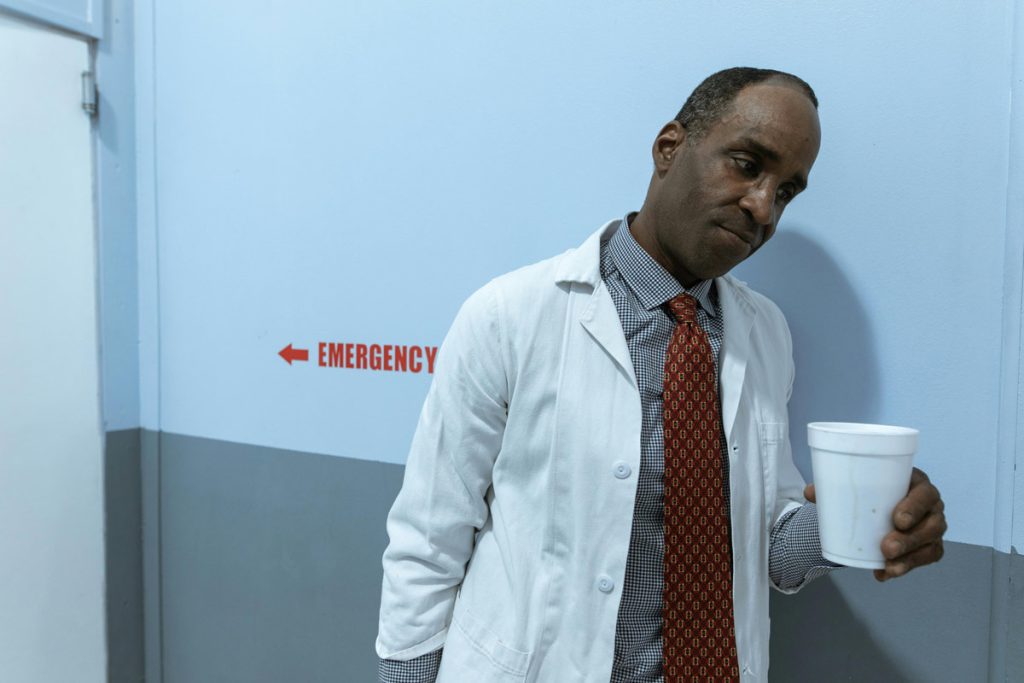
Your family doctor seems fine during your appointment. They ask the right questions, write the prescription, and smile appropriately. What you don’t see is that they’ve been running on empty for months, making clinical decisions through a fog of exhaustion that puts everyone at risk.
Burnout is widespread among healthcare and social work professionals, and that invisible strain is increasingly affecting patient care, with nearly half of physicians reporting symptoms.
How Physician Burnout Develops
Physician burnout has evolved from a personal struggle into a patient safety emergency. Family physicians with burnout are 1.5 times more likely to leave practice than their colleagues, according to research published in JAMA Internal Medicine.
When 49% of physicians report burnout symptoms, the quality of patient care across the entire healthcare system suffers. The connection between doctor wellbeing and patient safety is no longer theoretical; it’s measurable and urgent.
How Burnout Affects Clinical Judgment
Burnout begins quietly. Doctors go through the motions, feeling less joy in work that once fulfilled them. Konstantin Lukin, Ph.D., Licensed Clinical Psychologist and Founder of Lukin Center for Psychotherapy, explains that burnout and depression share similar neurological problems in the prefrontal cortex, making decisions feel overwhelming.
The real danger emerges when emotional depletion affects clinical judgment. Consider a family physician who begins avoiding complex diabetes cases; the avoidance stems from emotional exhaustion rather than clinical uncertainty. This selective avoidance can lead to delayed diagnoses, suboptimal treatment plans, and compromised continuity of care.
Burned-out physicians show reduced diagnostic accuracy and increased medical errors. A direct threat to patient outcomes that extends beyond individual doctor-patient relationships.
The Effect of Burnout on Patient Care
Research demonstrates that physician burnout correlates with increased rates of healthcare-associated infections, longer patient recovery times, and reduced patient satisfaction scores. Burned-out physicians are twice as likely to be involved in patient safety incidents and show measurable decreases in adherence to clinical guidelines.
Kosta Condous, MA, LMFT, Co-Founder of Higher Purpose Recovery, explains the underlying trauma: “Doctors observe significant pain and death, deal with medical mistakes, and witness healthcare system failures without adequate mental health support. This unprocessed trauma manifests as hypervigilance, sleep problems, or substance use as coping mechanisms.”
The irony is stark: those dedicated to healing others struggle to address their own psychological wounds, creating a cycle that ultimately compromises their clinical effectiveness.
Warning Signs of Physician Burnout
Physical symptoms often appear before doctors recognize the psychological impact: persistent headaches, chronic fatigue unrelieved by rest, and sleep disturbances that resist traditional interventions.
Behavioral changes include increased irritability with patients, cynicism about treatment effectiveness, and emotional detachment during patient interactions. The most concerning sign is when even successful patient outcomes fail to bring professional satisfaction, signaling complete emotional depletion.
Early recognition is crucial for both individual wellbeing and the maintenance of clinical standards.
How Physician Burnout Affects the Healthcare System
When doctors leave practice due to burnout, the consequences cascade throughout healthcare delivery. Physician shortages are projected to reach 124,000 by 2034, disproportionately affecting rural and underserved communities.
Patients who lose their primary physician experience 40% higher emergency department utilization and significantly increased healthcare costs. Meanwhile, remaining physicians absorb heavier patient loads, perpetuating the conditions that drive burnout and compromising care quality across the system.
Addressing Physician Burnout: What Works
Addressing physician burnout requires treating it as a core patient safety priority. Successful interventions operate at multiple levels:
System-level changes: Reducing administrative burden, optimizing electronic health record workflows, and implementing team-based care models that distribute workload effectively.
Organizational support: Creating peer assistance programs, providing access to mental health resources, and establishing cultures that normalize help-seeking behavior among healthcare professionals.
Individual resilience: Training in stress management, mindfulness-based interventions, and cognitive behavioral techniques specifically designed for healthcare providers.
Healthcare organizations must fundamentally shift culture to prioritize physician wellbeing as essential infrastructure for patient safety. The evidence is clear: when doctors cannot maintain their own mental health, they cannot provide optimal care for their patients.
The imperative is both ethical and clinical: protecting physician wellbeing directly protects patient safety and healthcare quality outcomes.
About the Authors:
Dr. Konstantin Lukin, PhD, is a Licensed Clinical Psychologist and Founder of the Lukin Center for Psychotherapy. He specializes in anxiety, depression, and emotional regulation, integrating cognitive-behavioral and psychodynamic approaches. His work helps clients build resilience and insight by addressing how early experiences shape emotional health.
Kosta Condous, LMFT, is a Licensed Marriage and Family Therapist and Co-Founder of Higher Purpose Recovery. With extensive experience across inpatient and outpatient settings, he specializes in addiction, mental health, and co-occurring disorders. Kosta brings a leadership philosophy rooted in collaboration and creativity to elevate the standard of client care.
Photo by RDNE Stock project: https://www.pexels.com/photo/doctor-in-lab-coat-holding-a-cup-6129155/
The opinions and views expressed in any guest blog post do not necessarily reflect those of www.rtor.org or its sponsor, Laurel House, Inc. The author and www.rtor.org have no affiliations with any products or services mentioned in the article or linked to therein. Guest Authors may have affiliations to products mentioned or linked to in their author bios.
Recommended for You





- When a Loved One Refuses Addiction Treatment: What Families Can Do - October 12, 2026
- How to Support Someone in Therapy: What Families Should Know About the First Month - October 8, 2026
- Why Teen Mental Health Advocacy Matters - October 5, 2026


