
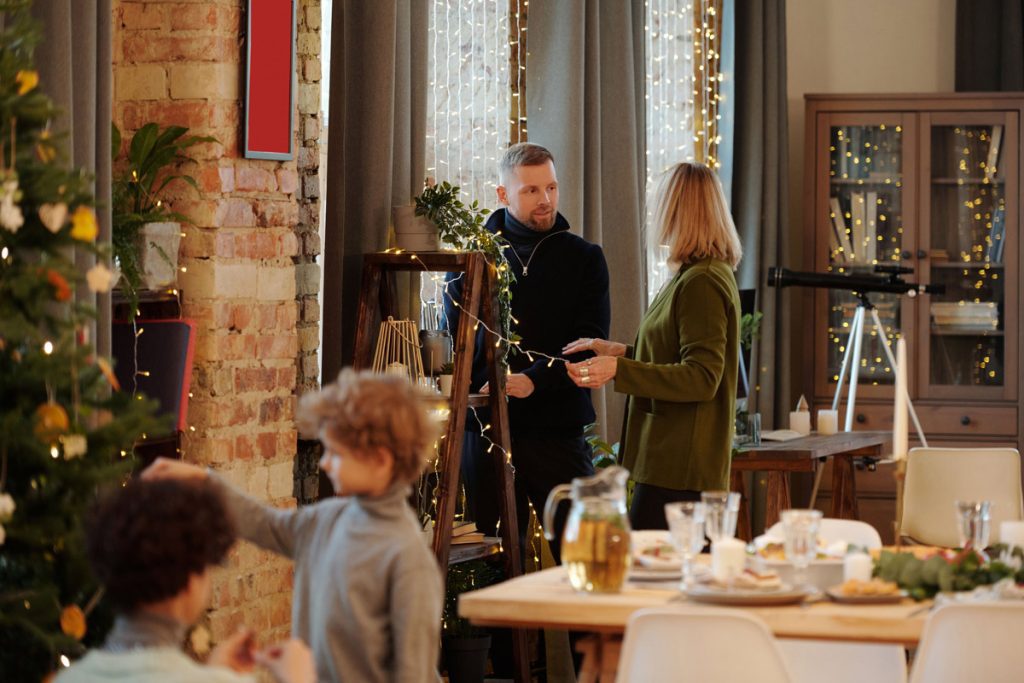
The holidays ask a lot of families. There are tables to set, traditions to keep, and rooms full of people who love each other and still manage to say the wrong thing. When someone you love is in recovery, the season carries one more weight: you want to be steady for them, but you are not always sure what to say.
Here’s the good news. If you’re wondering what to say to someone in recovery, here’s the good news: you do not need the perfect words. You need a few honest ones, said kindly, at the right moment. Below are some to get you started — words for the dinner table, for a card, for a text, and for the days that feel harder than the rest. It is about language, not advice: no medical claims, no treatment guidance, just the words that help a person feel seen rather than watched.
What to say to someone in recovery: the quiet words help most
Recovery is often talked about at big moments — anniversaries, milestones, turning points. But the people living it will tell you it is mostly made of small ones: getting through a party, answering “how are you?” without flinching, choosing what to do with their hands when everyone else raises a glass.
The words that help most match that scale. They are short, specific, and free of pressure:
- “I’m glad you’re here.”
- “You don’t have to explain anything tonight.”
- “I saved you a seat next to me.”
- “There is sparkling cider and coffee — help yourself to whatever you like.”
- “Take whatever time you need. We’re not in a rush.”
Notice what these sentences do. They do not praise, diagnose, or monitor. They simply make room. A person in recovery does not need to be celebrated at the table; they need to belong at it, the way everyone else does.
At the holiday table: keep the conversation ordinary
The holiday table is where families most often trip over their own good intentions. Someone asks how recovery is going in front of eight relatives. Someone else announces, a little too loudly, that there is no alcohol in the punch “for your sake.” Both come from love. Both come from love. But both turn one person into the subject of the evening.
A gentler approach is to keep the conversation ordinary. Ask your loved one about their work, their drive over, the book on their nightstand. If they want to talk about their recovery, they will bring it up — and then the best response is simple:
- “Thank you for telling me. That means a lot.”
- “I’m proud of the work you’re doing — and I am here, whatever today brings.”
- “You know your limits better than anyone. I trust your judgment.”
And if the evening gets tense, a quiet word on the side can carry more than a speech: “Want to step outside for some air with me?” No explanation needed, no scene made.
Encouraging words for someone in recovery: lines for a card or text
Some of the kindest words never get said out loud. They arrive in a card, or in a text sent the morning after a hard gathering. If you are writing to a loved one in recovery this season, here are lines you can borrow as they are, or shape into your own voice:
- “This season I am thinking of you with so much gratitude — for your honesty, your humor, and the way you keep showing up.”
- “I know the holidays can be a lot. Whatever this week looks like for you, I am in your corner.”
- “You have handled hard days before, and you will handle this one too — and if you need a hand, mine is here.”
- “No big speech from me. Just this: I love you, I am proud of you, and there is always a seat at my table for you.”
- “Thank you for trusting me enough to let me be part of this year with you.”
A card is also a good place for something families forget to say: that the love did not change. “Nothing about this year has changed how proud I am to be your family.” For someone who has worried about being a disappointment, that sentence can matter more than any other gift.
On a hard day: say less, stay longer
There will be a day this season that is harder than the others — a gathering that runs long, a memory that surfaces, a moment when the old pull feels close. On those days, long speeches backfire. What helps is presence, stated plainly:
- “I am here. You don’t have to go through today alone.”
- “We can leave whenever you want. Just say the word.”
- “You have already done the hardest part by getting here.”
If they have had a setback, resist the urge to fix it in a sentence. “I am not going anywhere” is enough. It tells them the relationship isn’t conditioned on a perfect record — which is exactly what someone afraid of judgment needs to hear.
What not to say to someone in recovery
Just as important as what to say is what to skip. A few well-meant lines that tend to land badly:
- “Just one won’t hurt.” It can, and it is not yours to decide.
- “Are you sure you should be here?” It turns a celebration into a test.
- “You look so much better than last year.” It reminds them of the year they would rather not relive.
- Anything that begins “At least…” — it shrinks a real struggle into a comparison.
And one more: do not make promises on their behalf. “He is doing great now” may be true, but it is theirs to share, in their own words, when they are ready.
If you still don’t know what to say
When families struggle, it’s rarely because they do not care. It is because they care and are afraid of getting it wrong. They struggle because they care and they are afraid of getting it wrong. If that is you, here is a simple script for the whole season: say that you love them, say that you are glad they are here, and then let the evening be about everything else — the food, the music, the terrible jokes, the ordinary joy of being together.
You do not need to mention recovery at all for your support to count. Sometimes the kindest thing you can say to a loved one is simply: “Pass the potatoes.” It means: you are family, this is home, and you belong here — exactly as you are.
About the author: Kelly Nova is the writer and founder of TxtWish (txtwish.com), where she writes messages and card wording for every occasion — the right words for the moments that matter, from holiday cards to the hard conversations in between.
Photo by Nicole Michalou : https://www.pexels.com/photo/couple-decorating-a-christmas-lights-5764890/
The opinions and views expressed in any guest blog post do not necessarily reflect those of www.rtor.org or its sponsor, Laurel House, Inc. The author and www.rtor.org have no affiliations with any products or services mentioned in the article or linked to therein. Guest Authors may have affiliations to products mentioned or linked to in their author bios.
Recommended for You





- What to Say to Someone in Addiction Recovery This Holiday Season - November 24, 2026
- How to Find Mental Health Support Without Feeling Overwhelmed - November 23, 2026
- Being Cleared Isn’t the Same as Being Ready: A Veteran’s Transition to Civilian Life - November 19, 2026


