
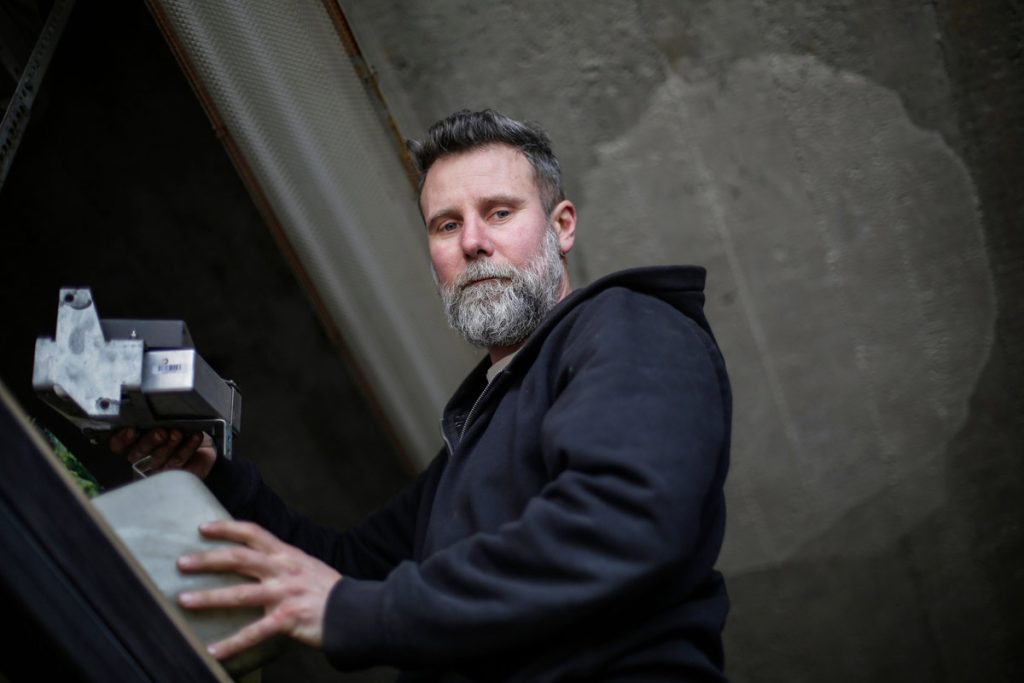
I spent two deployments in Kuwait and Iraq, came home with a neck injury, and walked off base with a piece of paper that said I was medically cleared. Nobody tells you that the paper and your actual readiness to function are two different documents, and only one of them gets signed.
When a Medical Clearance Meets Real Life
My first day back at the warehouse job that had been held for me, I was unloading a semi-trailer with a coworker. The heat inside felt close enough to the desert that my body locked up before my brain understood why. My chest started squeezing. My neck and shoulders, already wrecked, got worse by the minute. I kept working anyway, because I’d just found out my combat pay savings were almost gone and I had maybe a few months before rent became a real problem. Somewhere in that trailer, my mind went back to the convoys I used to dispatch, the trucks like that one, the soldiers who didn’t make it back from escorting them. I got rough with the packages. My coworkers told me to calm down. I’d already left the building mentally.
I came out of the back of that trailer and dropped to the ground, gasping through my first full panic attack while the pain in my neck made it hard to move at all. The day ended in the ER. The company let me go a few days later and told me it wasn’t safe to bring me back. I went from a hospital bed into a depression with no income, no mission, and no clear idea who I was supposed to be without a uniform.
The Gap in Veteran Transition to Civilian Life
Here’s the part that took me years to say out loud: the system did everything it was supposed to do on paper. I got my discharge paperwork. I got my medical clearance. Nobody checked on me after that. Nobody followed up to see whether the body and mind that left that trailer on a stretcher had actually caught up to civilian life. Cleared became the finish line, when it should have been the starting gun.
I think about this every time Veterans Day rolls around and the conversation turns to thanking veterans for their service, which is fine as far as it goes. But it skips the part where a lot of us come home and quietly fall through a gap no one is watching. You don’t need a diagnosis to fall into that gap. You just need the paperwork to say you’re fine while the rest of you hasn’t gotten the memo yet.
What Helped Me Find My Way Back
What actually moved me out of that hole wasn’t a program or a prescription, though both have their place and I’d never tell someone to skip either. It was smaller and slower than that. It was a few people who refused to let me disappear, a renewed relationship with my faith that gave me something to stand on besides my own grit, and eventually finding a reason to get up that had nothing to do with a job title. I started writing. The first book took me years and said almost everything badly, but it got the wound out of my chest and onto a page where I could actually look at it. Six more followed. I built a media company out of nothing because I needed something to build. None of it erased the neck injury or the bad nights that still show up uninvited. It gave me a mission big enough to work around them.
How Families Can Support a Veteran After Deployment
If you’re the family member or friend of someone who just came home, here’s what I’d ask you to watch for. Watch the gap between what they say and how they move through a room. Watch for the ones who insist they’re fine a little too fast. The paperwork will tell you they’re cleared. It won’t tell you whether they’re ready, and that’s a question only time, attention, and people who don’t look away can answer. Keep showing up after the homecoming parade ends, because that’s usually when the real transition starts.
I won’t pretend every veteran’s path out of that gap looks like mine. Some need clinical care that goes well beyond what faith or purpose alone can offer, and that care matters as much as anything else in this story. What I can tell you is that the gap is real, it’s survivable, and nobody should have to find their own way across it in silence. That’s the whole reason I talk about mine.
Whether you’re a veteran finding your way after service or a family member worried about someone who just came home, a Resource Specialist can help you understand your options and connect with the right mental health support.

About the Author: Marcus Hart is an Army combat veteran of Kuwait and Iraq, the author of seven books, including 5 Faith-Fueled Steps to Overcome Anxiety and Rebuild Confidence, and the founder of Transform U Media Network in Milwaukee, Wisconsin. He speaks and writes on veteran resilience and faith-based leadership at marcus-hart.com.
Photo by Andrea Piacquadio: https://www.pexels.com/photo/man-in-black-hoodie-jacket-3855644/
The opinions and views expressed in any guest blog post do not necessarily reflect those of www.rtor.org or its sponsor, Laurel House, Inc. The author and www.rtor.org have no affiliations with any products or services mentioned in the article or linked to therein. Guest Authors may have affiliations to products mentioned or linked to in their author bios.
Recommended for You




- Being Cleared Isn’t the Same as Being Ready: A Veteran’s Transition to Civilian Life - November 19, 2026
- Coming Out of Survival Mode: When the Danger Ends and You Don’t Know What to Do With Yourself - November 12, 2026
- When the Kid Who’s Doing Fine Isn’t: Anxiety in High-Achieving Teens - November 9, 2026


