
Anyone who has tried to “push through” a difficult emotion knows how quickly that approach can fail. You tell yourself to stay strong, to not let it get to you, to keep moving forward, and for a while it might even work. Then the feeling resurfaces anyway, often heavier than before, because willpower can’t make an emotion disappear. It can only help you ignore it a little longer.
Many people in recovery hit this same wall, whether from addiction, depression, anxiety, or grief. The instinct to fight through pain with sheer determination is understandable. It is also, frequently, unsustainable.
Long before modern psychology developed language for emotional regulation, a spiritual tradition called Sufism, the mystical branch of Islam, was already teaching something remarkably similar to what recovery programs now emphasize. Not the suppression of difficult feelings, but the practice of sitting with them honestly, without rushing to fix, escape, or numb what is happening internally.
The Difference Between Enduring Pain and Sitting With It
Enduring pain usually means clenching through it, waiting for it to pass while resisting it the entire time. Sitting with pain is different. Sitting with it means staying present with what a person is feeling, without immediately trying to change it, fix it, or push it away.
This distinction matters enormously in recovery. Many people relapse or spiral not because they lack willpower, but because they have spent years bracing against their own emotions rather than learning to be present with them. The bracing itself becomes exhausting, and eventually unsustainable, often leading right back to whatever coping mechanism offered temporary relief in the past.
Sufi teachers have long described a practice called muraqabah. It’s a form of contemplative awareness that involves observing one’s inner state — including uncomfortable thoughts and feelings — without judgment or the urge to resolve them immediately. The goal is not to stop feeling. It is to develop the capacity to notice feelings clearly, like watching weather pass through the sky, without getting swept up in every gust of wind.
Why This Approach Can Feel Counterintuitive at First
For someone used to fighting through emotional pain, the idea of simply sitting with it can initially feel passive, even risky. If addiction or unhealthy coping developed partly as a way to escape difficult feelings, learning to stay present with those same feelings can understandably feel frightening.
It helps to understand that sitting with an emotion is not the same as being controlled by it. A person can feel grief, anger, or shame fully, acknowledge it honestly, and still choose their next action deliberately, rather than reactively. In fact, this kind of grounded awareness often creates more stability than suppression ever did, because avoided emotions tend to resurface with more intensity later, while acknowledged emotions tend to soften over time.
A Simple Practice for Sitting With Difficult Emotions
None of this requires adopting any particular religious belief to be useful. A person in any stage of recovery can try a simplified version of this practice during a difficult moment.
Begin by naming what you are feeling as specifically as possible, rather than a vague sense of feeling “bad” or “off.” Is it shame, fear, loneliness, resentment, exhaustion? Naming the feeling accurately is often the first step toward not being overwhelmed by it.
Next, place a hand gently on your chest and take a few slow breaths, simply noticing the physical sensation of the emotion in your body rather than the story attached to it. Where does it sit? Is it tight, heavy, restless? The physical focus shifts attention away from spiraling thoughts and toward something more immediate and manageable.
Finally, resist the urge to immediately fix, analyze, or distract from the feeling. Give it two or three minutes of honest attention before deciding what, if anything, needs to happen next. Often, simply being witnessed by your own attention is enough to reduce its intensity, even slightly.
Why This Complements, Rather Than Replaces, Clinical Support
This practice is not a substitute for therapy, medical treatment, or a structured recovery program. It is a complementary tool, something that can be used alongside professional support to build a healthier relationship with difficult emotions in daily life, particularly in the moments between sessions or meetings when a person is on their own.
Recovery is rarely a straight line. There will be days when willpower alone is not enough, and reaching for something to survive the next few minutes is a valid, even necessary, part of healing. Learning to sit with pain rather than only fighting through it offers another tool for those moments, one grounded in a centuries-old tradition. That tradition understood something modern recovery science continues to affirm: healing tends to happen not by force, but by honest, patient presence with what is actually happening inside us.
About the Author: Shoaib writes about mental health and recovery through the lens of Sufi wisdom at Divineque.com, exploring how ancient spiritual practices can support modern emotional healing.
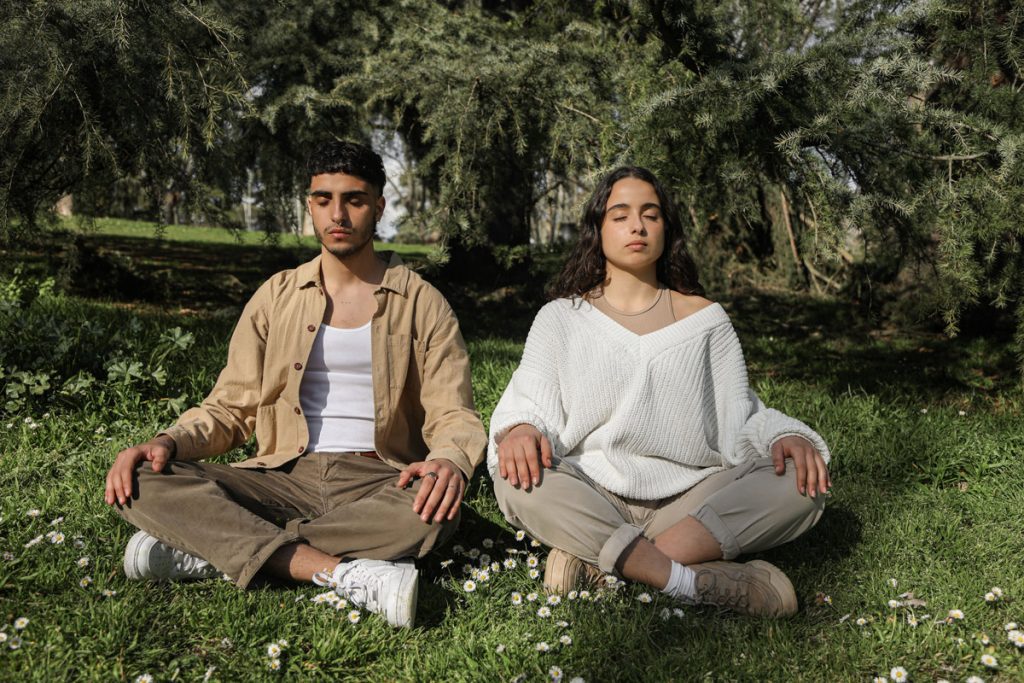
Photo by Cup of Couple: https://www.pexels.com/photo/a-man-and-woman-sitting-on-green-grass-field-while-meditating-with-their-eyes-closed-6962625/
The opinions and views expressed in any guest blog post do not necessarily reflect those of www.rtor.org or its sponsor, Laurel House, Inc. The author and www.rtor.org have no affiliations with any products or services mentioned in the article or linked to therein. Guest Authors may have affiliations to products mentioned or linked to in their author bios.
Recommended for You





- When Willpower Isn’t Enough: What an Ancient Practice Teaches About Sitting With Difficult Emotions - August 31, 2026
- What Recovery from Childhood Trauma Looks Like When You Were Never Supposed to Need It - August 27, 2026
- Surviving Cancer Was Only Half the Battle: What Nobody Told Me About Mental Health After Cancer - August 20, 2026


