
We often assume that understanding our emotions means being able to explain them. If we can name what we feel and trace it to a cause, we think the work is done. But many emotions do not begin as thoughts. They appear first as physical sensations, fleeting images, or a general unease that resists neat explanation.
This is where expressive practices such as writing, dancing, and drawing become essential — not as hobbies or outlets for producing something meaningful, but as means of staying present with an experience before the mind rushes to explain it. Each practice offers a different language for emotional truth, especially when words feel too narrow.
Writing for Mental Health: Discovering What You Feel on the Page
Writing is often viewed as a tool for communication, but its real power lies in discovery. When you write privately, the goal is not coherence or persuasion; it is honesty. Thoughts unfold in real time, often contradicting themselves or circling the same idea repeatedly. That repetition is not failure; it is information.
Through writing, patterns emerge. Certain concerns resurface. Certain words appear again and again. You begin to notice where your thinking tightens, what it avoids, and where clarity suddenly appears. Writing slows the mind just enough to make these movements visible.
This is why journaling and expressive writing can feel surprisingly clarifying, even when the entries themselves feel messy. The value isn’t in producing insight on command. It’s in creating a record of how your inner world actually is, rather than how you think it should be.
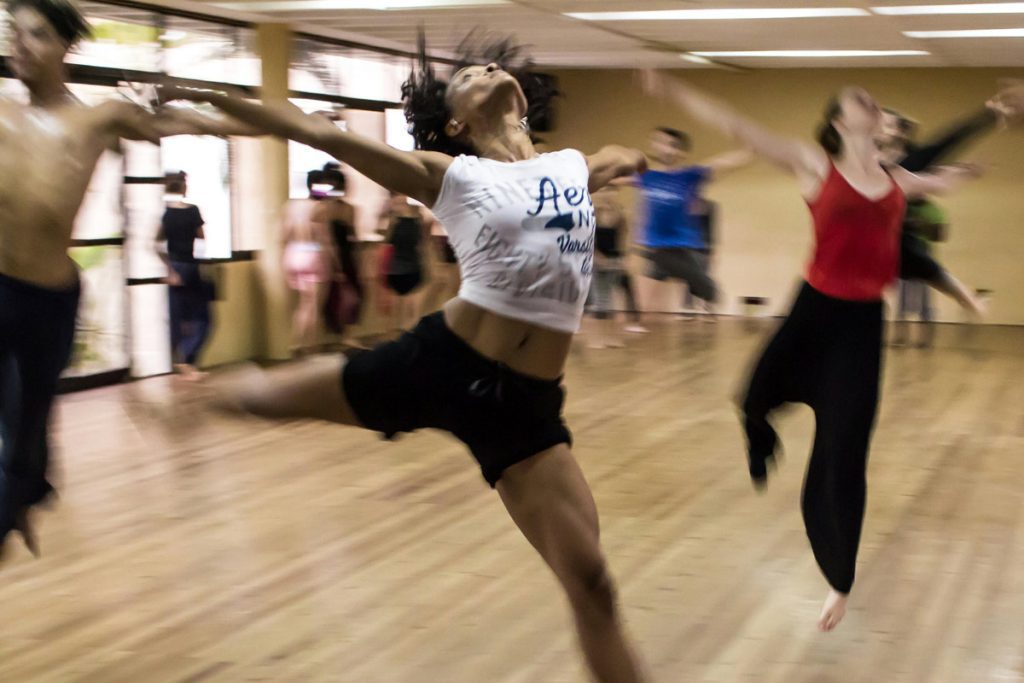
Dance and Movement: Letting the Body Speak Before the Mind Intervenes
Some emotions resist explanation. They live in the body long before they reach conscious thought. Tension, grief, excitement, and anxiety often register physically first, in tightened shoulders, shallow breath, or restlessness.
Movement allows those emotions to express themselves without translation. Dancing, especially when it’s unstructured and private, bypasses the urge to make sense of what’s happening. The body leads, releasing, resisting, and circling back without needing a reason.
People often notice a shift afterwards, even if they cannot name it. Processing has occurred wordlessly. Understanding may come later or not at all. Often, it does not need to. The emotional work has already been done at the level where it began, in the body.
Drawing: Making Emotions Visible Without Explaining Them
Drawing offers a quieter, more observational form of emotional expression. It doesn’t demand clarity or narrative. It asks only for attention. Lines, shapes, and spaces begin to reflect internal states in ways that feel intuitive rather than analytical.
When emotions are externalized visually, they become easier to sit with. Anxiety might show up as dense, repetitive marks. Calm might appear as an open space. Contradictory emotions can exist side-by-side without needing to be resolved.
This distance matters. Seeing an emotion expressed on paper enables you to experience it without being overwhelmed. You don’t have to decide what it means immediately. Recognition itself is often enough to bring a sense of grounding.
Different Emotions Call for Different Forms of Creative Expression
Writing, dancing, and drawing are not interchangeable because they engage different systems of understanding. Writing appeals to cognition and reflection. Movement engages sensation and regulation. Drawing activates perception and intuition.
None of these languages is more advanced or legitimate than the others. Some experiences want words. Others want movement. Others resist explanation altogether and ask only to be witnessed. Emotional health doesn’t come from forcing everything into language, but from knowing which language to use when.
The problem arises when we rely on one mode of expression to carry everything. Words are powerful, but they are not sufficient for every kind of truth.
Expression as Attention, Not Performance
All three practices ask the same thing: that you slow down and pay attention to what you’re feeling. They allow us to stay present with our experience without rushing to interpret, fix, or resolve it. Skill, productivity, and aesthetic value are beside the point.
This is why these practices are most therapeutically effective when done in private. Once expression becomes performance, honesty tends to narrow. For practicing artists, this distinction can be difficult. When does a writer compose something and NOT want the result to ‘sound good,’ or brim with emotional resonance? The key to dulling this performative impulse is to make art for and with oneself regularly, especially when one is not in a state of heightened emotion. Then, when those climactic moments of feeling do come, and we turn to the pencil or the page or ballet barre, the inner critic that demands expressive perfection can be more easily muted.
Over time, engaging with these practices builds emotional literacy. Not the ability to explain ourselves perfectly, but the ability to notice what is happening before it hardens into confusion or avoidance.
Why Creative Expression Matters for Mental Health
When emotions have no outlet, they do not disappear. They emerge as irritability, disengagement, or a persistent sense of being out of sync. Expressive practices keep us in dialogue with our inner life without demanding resolution.
Understanding unfolds gradually through repetition, attention, and patience. Sometimes the most honest response to a feeling is simply to notice and stay with it.
Writing, dancing, and drawing give us the languages to do just that. They meet us where we are: uncertain, unfinished, and still becoming. In doing so, they make space for emotion without forcing it into a shape it is not ready to take.
About the Author: Mallory Hellman (she/her) is the Program Director of Reach for Your Potential (RFYP), a nonprofit organization dedicated to expanding access to educational and personal growth opportunities for young people. Prior to this, she served as the Director of the Iowa Youth Writing Project from 2015 onwards. Mallory holds an MFA in Fiction from the lowa Writers’ Workshop and a BA in English and American Literature from Harvard University.
Photo by Michael Zittel: https://www.pexels.com/photo/people-inside-room-12312/
The opinions and views expressed in any guest blog post do not necessarily reflect those of www.rtor.org or its sponsor, Laurel House, Inc. The author and www.rtor.org have no affiliations with any products or services mentioned in the article or linked to therein. Guest Authors may have affiliations to products mentioned or linked to in their author bios.
Recommended for You